



-

- High Dewatering Rates and particulate removal in one system
- Simple Controls; RUN/DRAIN modes
- Reduce fluid recycling cost
- No expensive vacuum pump to service and replace
- Patented mass transfer technology uses ambient air to optimize and control dewatering rates
- Compact, efficient footprint - same diameter as a 55 gallon drum
- Remove free and dissolved water
- Highly effective in low and high humidity elements
-

- High Dewatering Rates and particulate removal in one system
- Simple Controls
- Reduce fluid recycling cost
- No expensive vacuum pump to service and replace
- Patented mass transfer technology uses ambient air to optimize and control dewatering rates
- Compact, efficient footprint
- Remove free and dissolved water
- Highly effective in low and high humidity elements
- Automatic air bleed on filter housing
-

- Water Sensor standard on all units to show percent saturation
- Removes 100% of free and over 90% of dissolved water, as well as 100% of free and over 90% of dissolved gases
- Maintenance, operating, troubleshooting instructions are in HMI (touchscreen) Automatic mode enables user-defined system shutdowns
- Use of a low maintenance, dry running claw vacuum pump helps to avoid any dangerous, chemically reactive by-products
-

- Small, compact and easy to operate unit for use during service calls or emergencies
- Reliable and convenient for continuous or occassional use
- Optional integrated heater to increase the rate of water extraction, especially for colder or higher viscosity fluids
-
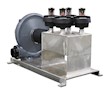
The HSD – Head Space Dehydrator is a new product designed for permanent installation on a hydraulic reservoir to reduce water vapor condensation. This water is a major cause of rust, cavitation, sensor failure, and other system failure modes. By passing a stream of dry, filtered air over the top of the oil, the moist air will be removed from the reservoir with dry air taking its place. The resulting reduction in water and particulate in the oil will result in better life of critical system components. Most hydraulic reservoirs in Primary Metals, Pulp & Paper, and other industries contain a pocket of air between the top of the reservoir and the fluid level. By addressing this known mechanism of water and particulate ingression, we can minimize contamination more effectively at a lower cost.